Home · Blog · FSD & Warranty Transfer
From the BlogDoes FSD Transfer on a Used Tesla? And Does the Warranty?
Updated November 14, 2026 · Blossom EV
The short answer
FSD: If the previous owner bought Full Self-Driving outright, it is attached to the car’s VIN and generally stays with the car in a private-party or dealer sale — unless that owner already moved it to a different Tesla. An FSD subscription never transfers: it ends when ownership changes. And because published sources flatly contradict each other on this, never pay extra for FSD you haven’t verified on the car’s own screen.
Warranty: Yes, the factory warranty transfers — Tesla’s warranty documents say coverage passes at no cost to anyone who subsequently and lawfully owns the car. What does not reset is the clock: coverage runs from the car’s original in-service date, not from the day you buy it.
These are the two questions that move the most money in a used-Tesla deal. A seller who believes “FSD is included” may price a car thousands of dollars higher. A buyer who assumes “eight years of battery warranty” starts the day they sign is working from a clock that actually started years ago. Here is how both really work in 2026, where the public information conflicts, and the verification steps that settle it for the specific car in front of you.
FSD changed completely in 2026
Most used-Tesla advice about Full Self-Driving is out of date, because Tesla changed the product itself:
- February 14, 2026 — outright FSD sales ended. For years FSD was a one-time purchase ($8,000 at the end, as high as $15,000 at its peak). That buy button is gone. In the US, FSD (Supervised) is now subscription-only at $99 per month.
- March 31, 2026 — the free FSD transfer program ended. Tesla used to run promotional windows that let an owner move purchased FSD from their old car to a new one. That program is over, which matters for transfer questions below.
- Any HW3 or HW4 car can subscribe. You no longer need to hunt for a car that “has” FSD. If the hardware is there — Autopilot computer HW3 or newer — the feature is a subscription decision you can make after you own the car, try for a month, and cancel.
That last point quietly caps what FSD is worth on a used car, and it changes the transfer question from “is FSD included?” to “is purchased FSD included — and can the seller prove it?”
What transfers with the car — and what doesn’t
| Situation | Does FSD stay with the car? |
|---|---|
| Previous owner bought FSD outright; private-party or third-party dealer sale | Generally yes — purchased FSD is attached to the VIN and rides along with the car. |
| Previous owner bought FSD outright, then transferred it to their next Tesla during a transfer window | No — the FSD left with the owner. Nothing remains on the car but the hardware. |
| Previous owner was paying the $99/month subscription | No — a subscription is tied to the owner’s account, not the car. It ends at the sale; you start your own if you want it. |
| Car was traded in to Tesla and is resold as a Tesla used vehicle | Do not assume it — Tesla can and often does remove FSD from trade-ins before reselling them. It counts only if the listing and the car itself show it. |
| Nearly new Model S or X with a bundled package | Verify carefully — there are reports that FSD bundled with certain post-February-2026 packages is first-owner-only and wiped on resale. Those reports are not fully corroborated, which is exactly why the check below matters. |
Why you’ll read the opposite elsewhere
Search this question and you will find confident guides stating FSD “generally does not transfer on a private sale” and that Tesla “typically strips it” — and other sources, resting on Tesla’s own North America documents, stating that outright-purchased FSD stays with the vehicle if the previous owner didn’t transfer it away. Tesla’s own communications have not been perfectly consistent either: an early-2026 message to owners described FSD as staying with your Tesla “as long as you own it,” wording that sits awkwardly next to its support pages.
The honest summary: the general rule has exceptions, the exceptions are expensive, and no article — including this one — can tell you what a specific car has. The car can. That is why the only safe position is to verify the individual vehicle, by VIN and on its screen, before any FSD premium is agreed.
Verify FSD on the actual car — 5 steps
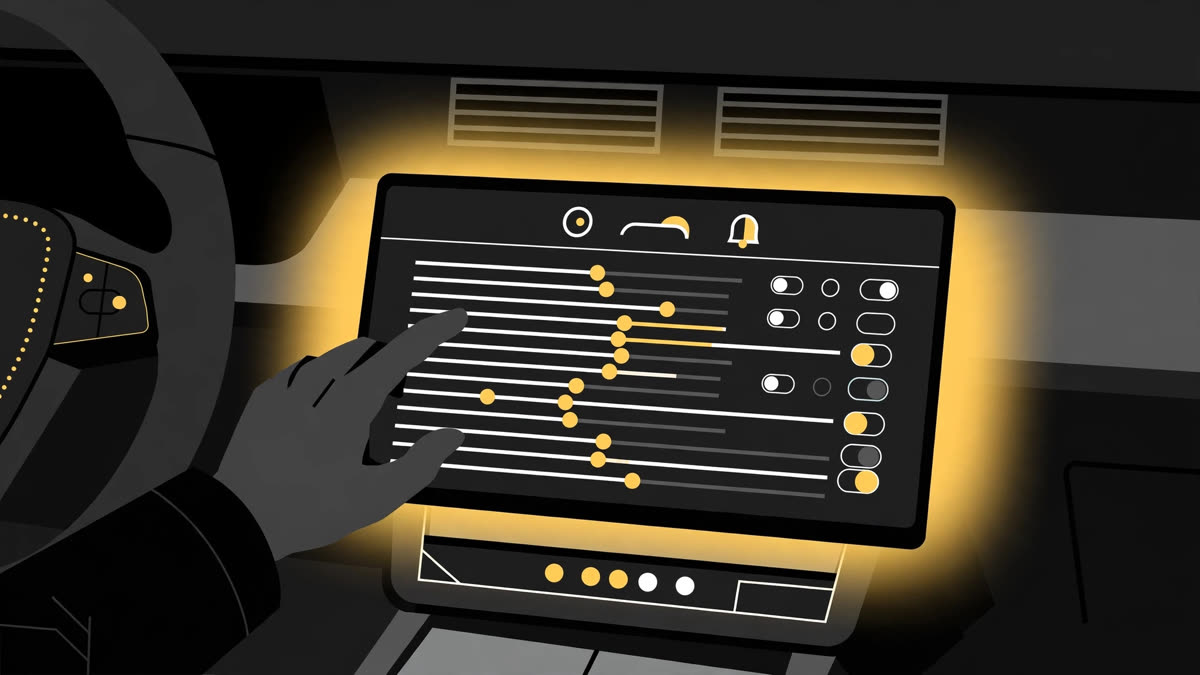
- Check the car’s screen, not the listing. In the car, open the software screen and look at the purchased packages for that vehicle. Purchased FSD shows as a purchased package; a subscription shows as a subscription. On a test drive they feel identical — the screens are how you tell them apart.
- Check the Tesla account for the car. Before money moves, have the seller show the vehicle in their Tesla account with FSD shown as purchased. Then confirm it again after the car is transferred into your account.
- Ignore “FSD capable.” Every HW3 and HW4 car is “FSD capable” — it means the hardware could run FSD on a subscription. It is worth a premium of exactly zero.
- Check the hardware while you’re there. Controls > Software > Additional Vehicle Information shows the Autopilot computer. HW4 (AI4) runs the full current FSD version; HW3 (AI3) runs a limited version — and there is no HW3-to-HW4 retrofit. Purchased FSD is worth more on HW4.
- Get it in writing. If the price includes FSD, the bill of sale should say so: “Vehicle includes Full Self-Driving (purchased, attached to VIN).” If a seller won’t write it down, price the car as if FSD isn’t there.
What an FSD premium is actually worth
With the subscription at $99 a month, the math is simple — that’s $1,188 a year:
| Seller’s FSD premium | What it prepays |
|---|---|
| $2,000 | About 20 months of FSD subscription |
| $3,000 | Roughly 2.5 years of subscription |
| $5,000 | More than 4 years — longer than many people keep a car |
And the subscription buys flexibility the purchase doesn’t: turn it on for a road-trip month, off for the other eleven. Purchased FSD can no longer be bought at any price, so cars that genuinely have it are a shrinking pool — that argues for some premium. The $99 alternative argues against a large one. The Blossom EV rule: if a seller can’t prove FSD is purchased rather than subscribed, pay a premium of zero and assume it isn’t there.
The factory warranty: yes, it transfers — the clock doesn’t reset
Tesla’s New Vehicle Limited Warranty is written to transfer: in Tesla’s words, the warranty “is transferable at no cost to any person(s) who subsequently and lawfully assume(s) ownership of the vehicle.” No transfer fee, no paperwork with Tesla beyond the normal ownership transfer into your Tesla account. What transfers is the remaining coverage:
| Coverage | Term (from original in-service date) |
|---|---|
| Basic Vehicle Limited Warranty (bumper-to-bumper) | 4 years / 50,000 miles |
| Battery & drive unit — Model 3 / Model Y Rear-Wheel Drive | 8 years / 100,000 miles, 70% capacity floor |
| Battery & drive unit — Model 3 / Model Y Long Range & Performance | 8 years / 120,000 miles, 70% capacity floor |
| Battery & drive unit — Model S / Model X / Cybertruck | 8 years / 150,000 miles, 70% capacity floor |
Three details that decide what the warranty on a specific car is really worth:
- The clock starts at the original in-service date — the day the first owner took delivery. A 2021 Model 3 bought in 2026 has roughly three years of battery warranty left, not eight. Always get the in-service date and do the subtraction in front of the seller.
- Whichever limit hits first ends coverage. A high-mileage 2022 can be out of battery warranty while a low-mileage 2020 is still covered. Years and miles are both running.
- The 70% figure is a floor, not a promise of a new battery. The warranty covers defects and capacity loss below 70% of original; normal degradation above that floor is expected wear. If Tesla does replace a pack under warranty, it may be a remanufactured one.
Two channel notes: cars bought from Tesla’s own used inventory carry the remaining factory coverage plus a Tesla Pre-Owned Vehicle Limited Warranty — an extra 1 year / 10,000 miles that starts when the basic warranty expires (or from delivery if it already has). And there are reports of a Tesla Battery & Drive Unit Extended Service Agreement for Model 3 and Y (around $2,000 for an added 2 years / 30,000 miles, buyable only while the factory battery warranty is still active) — availability and terms come from a single source, so confirm with Tesla before counting on it.
The combined check, on any used Tesla
- Open the car’s software screen: FSD purchased, subscribed, or absent — shown, not said
- Controls > Software > Additional Vehicle Information: HW3 or HW4 Autopilot computer
- Ask for the original in-service date; compute remaining basic and battery warranty from years and miles
- Match the battery/drive-unit term to the exact trim (100k, 120k, or 150k miles)
- If FSD is in the price, write “purchased, attached to VIN” into the bill of sale
- After the sale, confirm the car — and its FSD and warranty status — in your own Tesla account
Questions buyers ask
Does Full Self-Driving transfer to a new owner on a used Tesla?
If the previous owner bought FSD outright, it is attached to the car’s VIN and generally stays with the car in a private-party or third-party sale — unless that owner already transferred it to a different Tesla. An FSD subscription never transfers: it ends when ownership changes and the new owner starts their own. Because published sources conflict, verify the car’s FSD status on its own software screen and in its Tesla account before paying any premium for it.
Does the Tesla factory warranty transfer to a new owner?
Yes. Tesla’s warranty documents state the coverage is transferable at no cost to anyone who subsequently and lawfully owns the car. What does not reset is the clock: coverage runs from the car’s original in-service date and odometer, whichever limit — years or miles — is reached first.
How do I check whether a used Tesla really has purchased FSD?
Sit in the car and check its software screen and Tesla account: purchased FSD shows as a purchased package on the vehicle, while a subscription shows as an active subscription. “FSD capable” in a listing only means the hardware could run FSD — every HW3 and HW4 car qualifies. If a seller is charging extra for FSD, have the status shown to you on the car’s screen and write “includes Full Self-Driving (purchased, attached to VIN)” into the bill of sale.
How much extra is a used Tesla with FSD worth?
Less than most sellers ask. Since February 2026, FSD (Supervised) is subscription-only at $99 a month, so any compatible car is one subscription away from the same feature. A $2,000 premium prepays about 20 months of subscription; a $5,000 premium prepays more than four years. Only verified, purchased FSD — ideally on HW4 hardware, which runs the full FSD version — justifies a modest premium.